FUE Hair Transplant
Follicular Unit Extraction (FUE) involves harvesting individual follicular units from the donor area and transplanting them into areas affected by hair loss.
Explore FUE Hair TransplantPatient Results
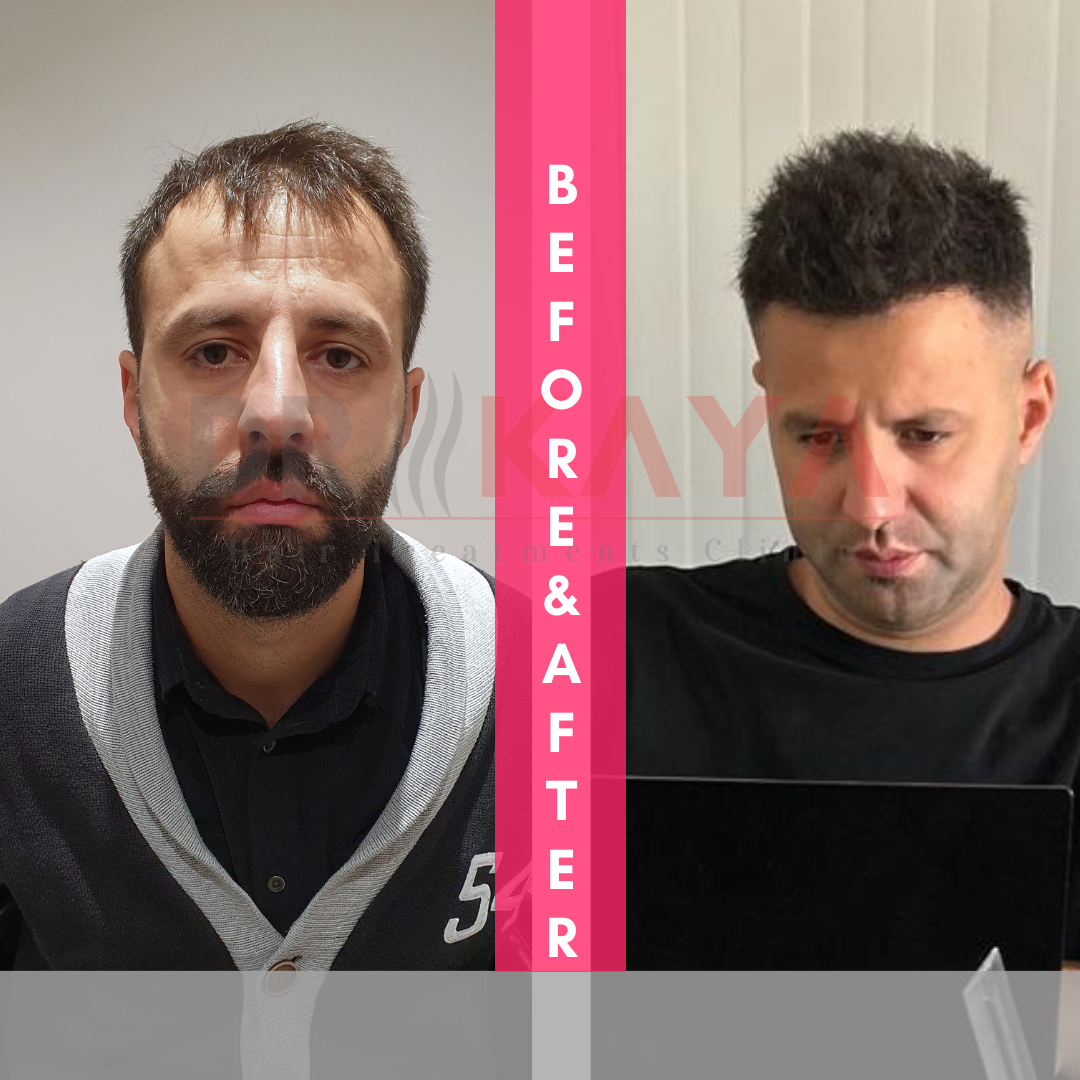
Real patient outcomes from hair transplant procedures performed at our Istanbul clinic, individually planned for each case.
After
BeforeA beard transplant case showing improved coverage and a fuller appearance after individually planned follicular graft placement.
After
BeforeA beard transplant case showing improved coverage and a fuller appearance after individually planned follicular graft placement.
After
BeforeA DHI hair transplant case showing restored hair density through direct placement of harvested follicular grafts.
After
BeforeA DHI hair transplant case showing restored hair density through direct placement of harvested follicular grafts.
After
BeforeA DHI hair transplant case showing restored hair density through direct placement of harvested follicular grafts.
After
BeforeAn eyebrow transplant case showing fuller eyebrow coverage with graft placement planned around the natural eyebrow shape.
After
BeforeAn FUE hair transplant case showing improved hairline coverage after individual follicular unit extraction and transplantation.
After
BeforeAn FUE hair transplant case showing improved hairline coverage after individual follicular unit extraction and transplantation.
After
BeforeA Sapphire FUE hair transplant case showing improved hairline coverage using individually harvested follicular grafts.
After
BeforeA Sapphire FUE hair transplant case showing improved hairline coverage using individually harvested follicular grafts.
After
BeforeA hybrid hair transplant case showing broader scalp coverage through a treatment plan adapted to the patient's hair-loss pattern.
After
BeforeA hybrid hair transplant case showing broader scalp coverage through a treatment plan adapted to the patient's hair-loss pattern.
After
BeforeA hybrid hair transplant case showing broader scalp coverage through a treatment plan adapted to the patient's hair-loss pattern.
After
BeforeA hybrid hair transplant case showing broader scalp coverage through a treatment plan adapted to the patient's hair-loss pattern.
A natural-looking hair transplant does not begin with a standard hairline template.
Hairline position, shape, recession pattern, temple design and density should be planned according to each patient's facial proportions, age, existing hair and long-term hair-loss pattern.
For this reason, the hairlines shown in our patient results are intentionally different. Each one reflects an individual hairline design and graft distribution plan rather than a one-size-fits-all approach.
Our goal is to create a hairline that looks natural and appropriate for the individual patient, while using the available donor hair responsibly.
Before a hair transplant, we assess the characteristics of the donor and recipient areas and determine how grafts can be distributed most effectively.
Treatment planning may consider:
This approach allows each procedure to be planned around the patient's own anatomy and available donor resources.
We intentionally perform procedures on a limited number of patients each day.
This allows our medical team to dedicate sufficient time to each patient, carefully assess the individual case and develop a personalised treatment and graft-placement plan rather than following a high-volume, standardised approach.
From consultation and hairline design to graft distribution and implantation, each stage is planned around the individual patient.
Hair transplantation is a gradual biological process. Transplanted follicles need time to establish themselves and progress through the natural hair-growth cycle.
Early shedding can occur after transplantation, followed by gradual new growth. Hair density and overall appearance continue to develop over the following months.
The cases presented on this page include follow-up results at different stages.
Individual outcomes can vary depending on donor characteristics, hair-loss pattern, graft quality, recipient-area conditions and the natural growth cycle.
The number of grafts required and their distribution are determined individually rather than according to a fixed number for every patient.
Follicular Unit Extraction (FUE) involves harvesting individual follicular units from the donor area and transplanting them into areas affected by hair loss.
Explore FUE Hair TransplantSapphire FUE is a variation of FUE in which sapphire blades may be used for recipient-site incision.
Explore Sapphire FUEDirect Hair Implantation (DHI) uses an implanter device to place harvested follicular grafts into the recipient area.
Explore DHI Hair TransplantHybrid hair transplantation combines selected transplantation approaches according to the requirements of the individual case.
Explore Hybrid Hair TransplantNew hair growth usually develops gradually over several months. The overall result continues to mature with time.
No. Hairline design is planned according to individual facial proportions, age, existing hair, hair-loss pattern and long-term restoration considerations.
The number of grafts varies between patients. It depends on the extent of hair loss, desired restoration, donor-area capacity and the areas being treated.
Each patient's hair characteristics, donor supply, degree of hair loss, facial proportions and treatment goals are different. These factors influence both the surgical plan and the final appearance.
We limit the number of patients treated each day so that sufficient time can be dedicated to individual assessment, planning and the procedure itself.
The cases presented on this page represent patient results from procedures performed at our clinic. Individual results vary, and before and after photographs should always be considered in the context of the patient's individual characteristics and treatment plan.
FUE and Sapphire FUE differ mainly in the incision tool used for the recipient site, DHI uses an implanter pen for direct placement, and Hybrid combines approaches within a single procedure. The technique used depends on the individual case, not a single default choice.
These before and after results are from patients treated at our clinic in Istanbul, Türkiye, a leading destination for hair transplantation.
A successful hair transplant is not simply about the number of grafts transplanted.
It is about understanding the patient's hair loss, designing an appropriate hairline, using the donor area responsibly and distributing grafts according to the individual needs of each area.
By treating a limited number of patients each day, we can dedicate more time to individual planning and provide a more personalised approach to hair restoration.